Key points
- Light and dark have the biggest influence on the body clock, the NIGMS says.
- In a small NHLBI-funded study, one night under overhead room light was followed by a higher heart rate the next morning.
- Researchers advise turning off lamps and screens and covering window light fully.
- A mask covers what the room cannot: a partner's lamp, a streetlight, an early sun.
Your body clock reads light
The NIGMS describes circadian rhythms as the physical, mental and behavioral changes the body goes through over a 24-hour cycle. Light and dark, it says, have the biggest influence on them. A master clock in the brain controls the production of melatonin based on the amount of light the eyes receive.
Screens come up in the same fact sheet, which names light from electronic devices at night as something that can confuse biological clocks. An article on the AASM Sleep Education site by RAND scientist Wendy Troxel puts it more directly. Light, particularly the blue light from devices, suppresses melatonin, the hormone that signals the brain it is time for sleep. The NHLBI adds its own version: bright artificial light from a TV or computer screen may signal the brain that it is time to be awake.
What the NHLBI studies found, and what they did not
In 2022 the NHLBI reported a study it helped fund, published in PNAS. Twenty healthy people in their 20s spent two nights in a sleep lab. Those who slept one night under overhead room lighting, rather than in dim light, had a higher heart rate and increased insulin resistance the next morning. The researchers said the study underscores the importance of avoiding or minimizing light exposure during sleep.
A later NHLBI feature puts that study next to a second one, in adults ages 63 to 84. Older adults exposed to even moderate amounts of ambient light at bedtime were more likely to be obese, to have diabetes and to have high blood pressure. The feature describes a link, and it says plainly that the exact mechanism behind it is unclear.
Read both with their limits in view. Twenty people over two nights is a small group, and a sleep lab is not your bedroom. A link in older adults says that light and these risk factors go together, not how one leads to the other. What the researchers drew from it is modest and practical: keep light out of the room while you sleep.
Make the room dark first
Dark starts with the room, not with anything you wear. The NHLBI lists a bedroom kept quiet, cool and dark among the habits that may improve sleep, with a dim night light fine if needed. Its lights-off feature passes on what the researchers suggest, and Troxel adds the simplest fix for a window.
- Turn off lamps and light-emitting electronics before bed.
- Spend the hour before bed away from bright screens, which the NHLBI says may signal the brain that it is time to be awake.
- If light comes in from the windows, cover it fully, or at least move the bed so the light is not shining in your face.
- Try blinds, drapes or even a dark sheet over the window, as Troxel suggests.
- For older people, the researchers suggest a small, warm-colored nightlight to reduce the chance of falls.
The light that is left over
Curtains take care of the window. What remains usually comes from inside: the standby dot on a TV, a charger's glow, a hallway bulb under the door, a phone lighting up on the nightstand. Close the door, turn the phone face down and cover the small lights before you buy anything.
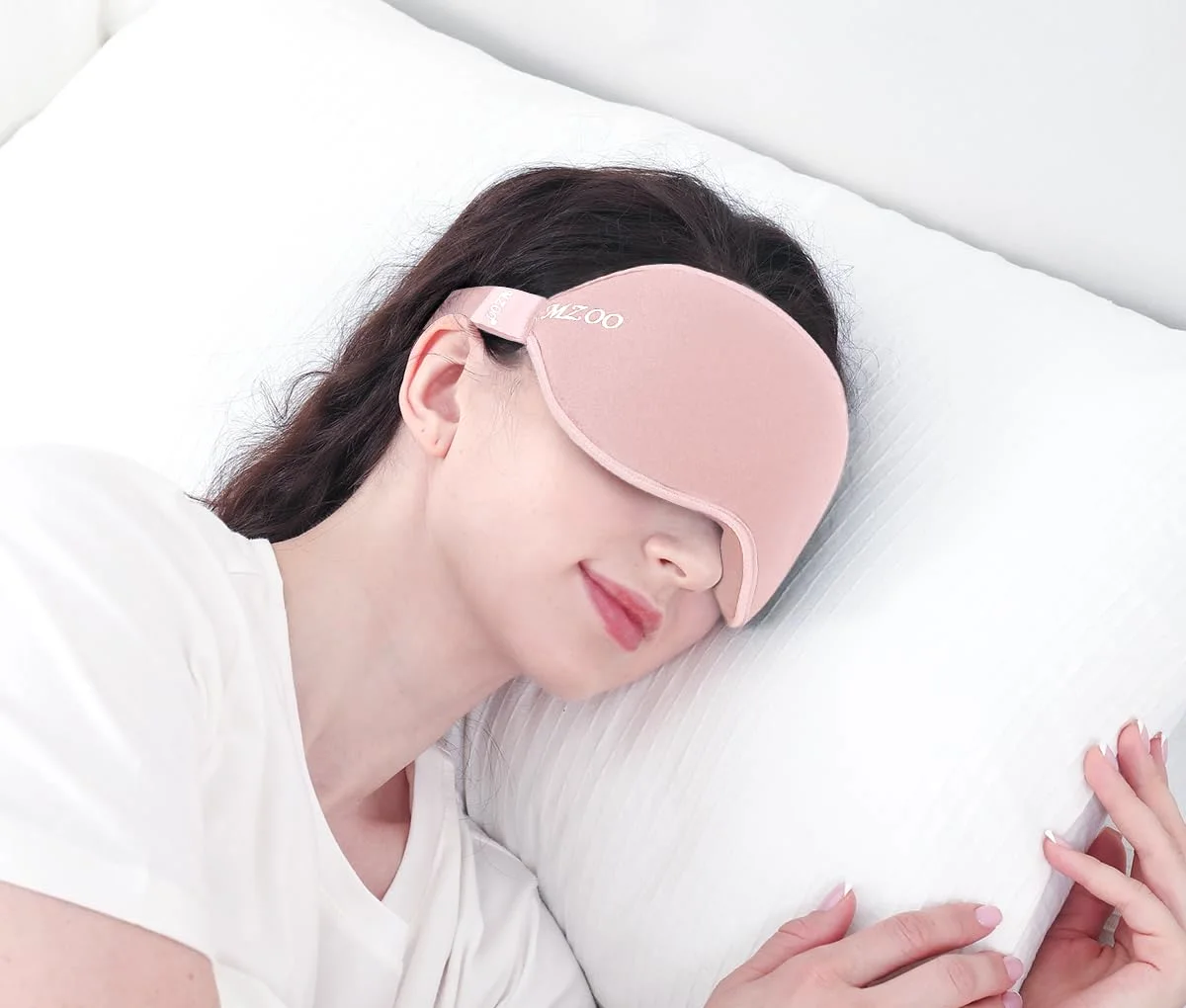
Some light still stays. A partner reads after you have gone to bed. Outside, a streetlight sits level with the window. In June the sun comes up before your alarm, and the curtains glow at the edges. Troxel names exactly these cases on the AASM Sleep Education site: if some light cannot be avoided, or you and your partner come to bed at different times, consider an eye mask.
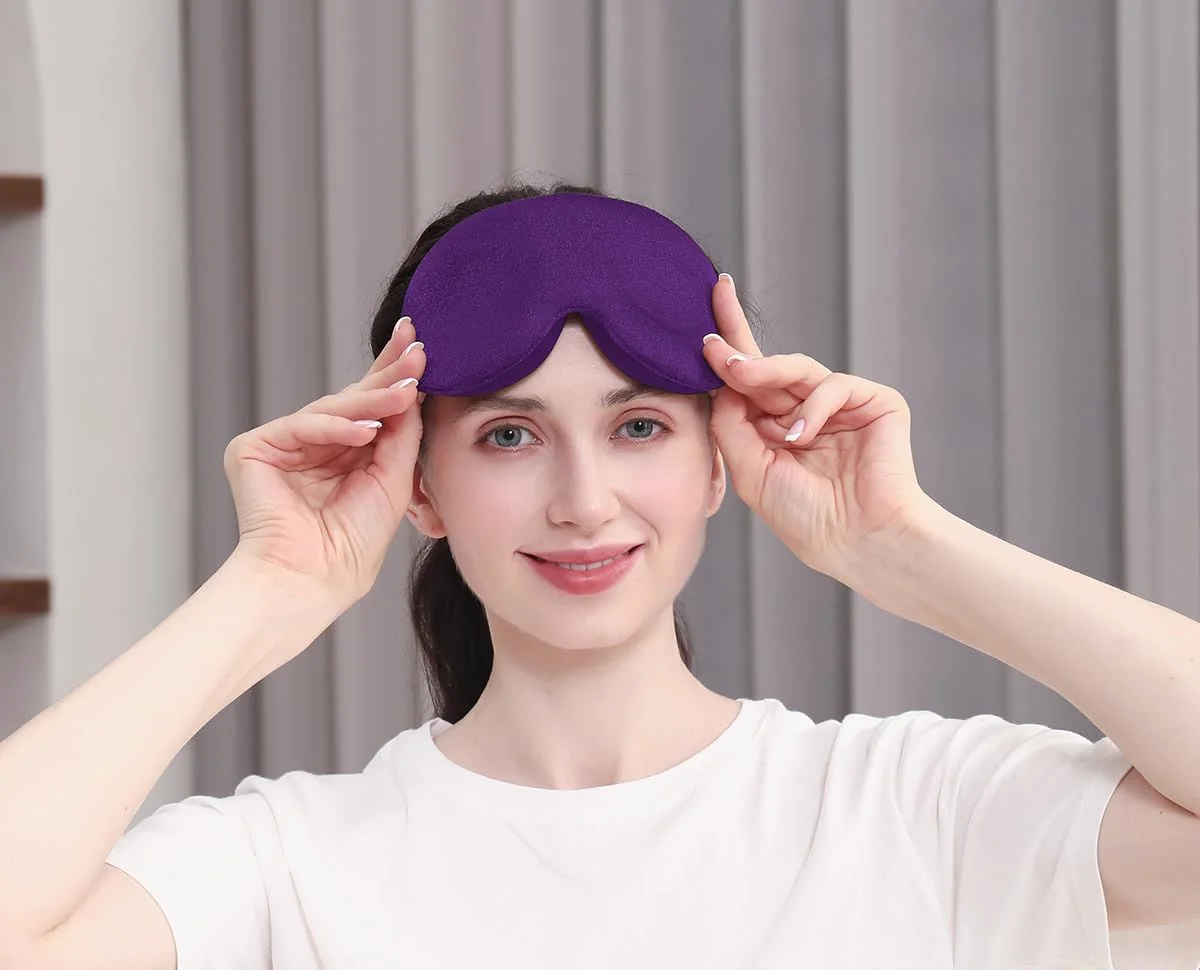
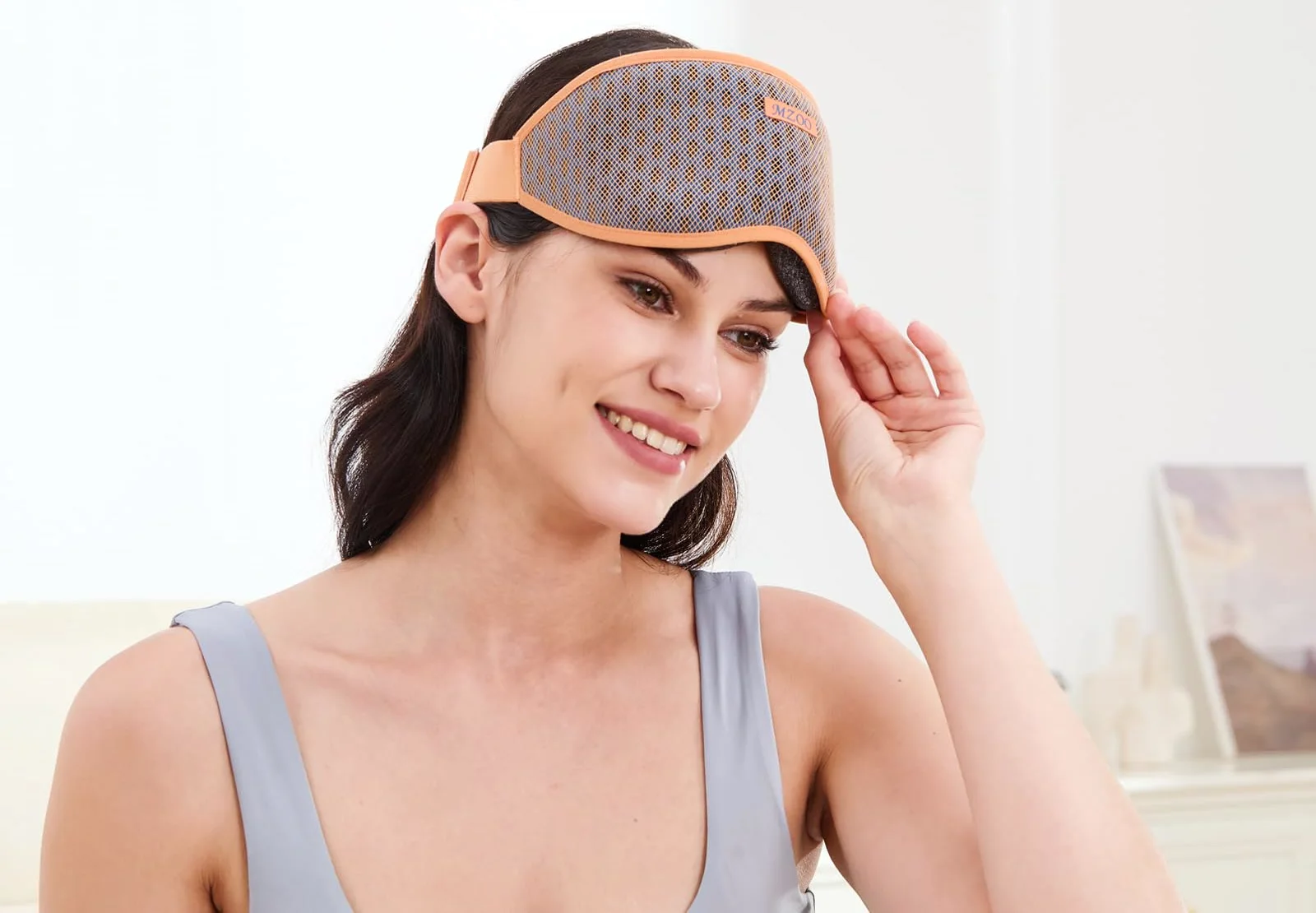
Fit decides whether a mask actually gives you the dark. One that lifts at the nose lets the morning in on the very stripe you meant to cover. Look for cups that close around the eyes and a face that meets the cheeks. The guide to choosing a sleep mask goes through cup depth, the nose and the strap. If you go to bed in lash extensions or mascara, try our Spacious mask. It has 18 mm cups and a face side shaped to the brow and cheeks, which closes the gaps above and below the eyes.
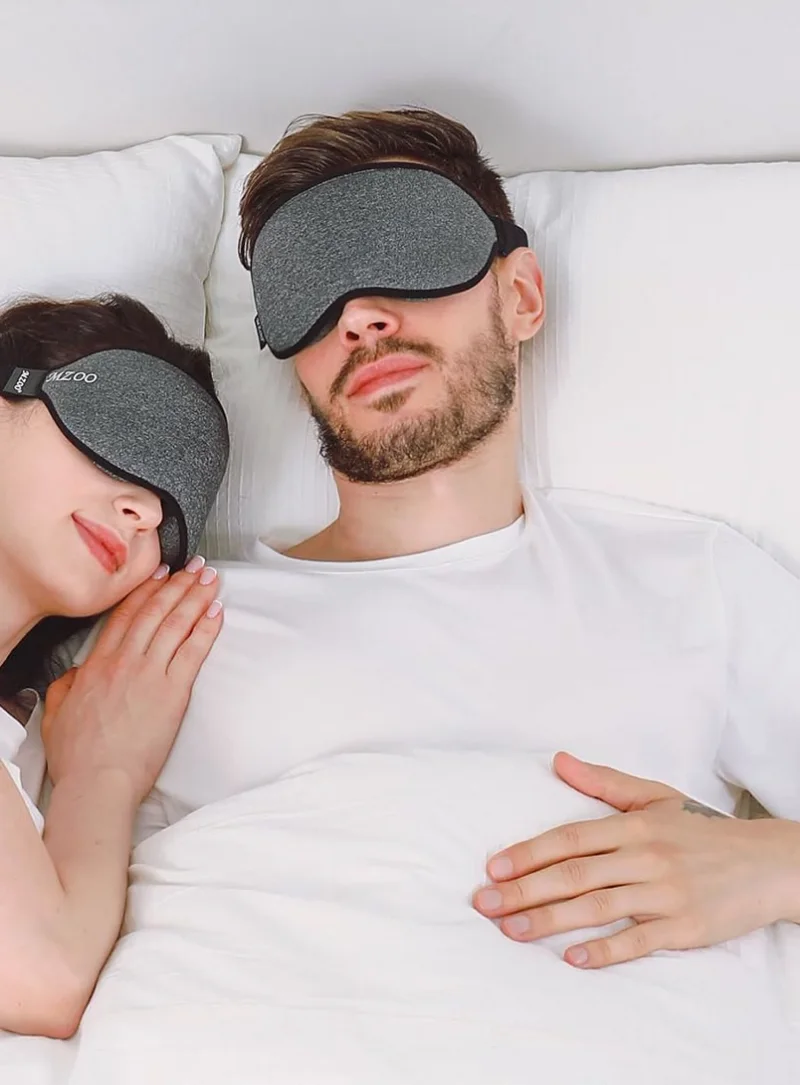
Keeping the mask on until morning
A mask that slides off at three in the morning leaves you in whatever light the room has. The strap does most of the work here. Set it round the back of your head, above the ears, and tighten it until the mask stays put when you turn your head, and no further.
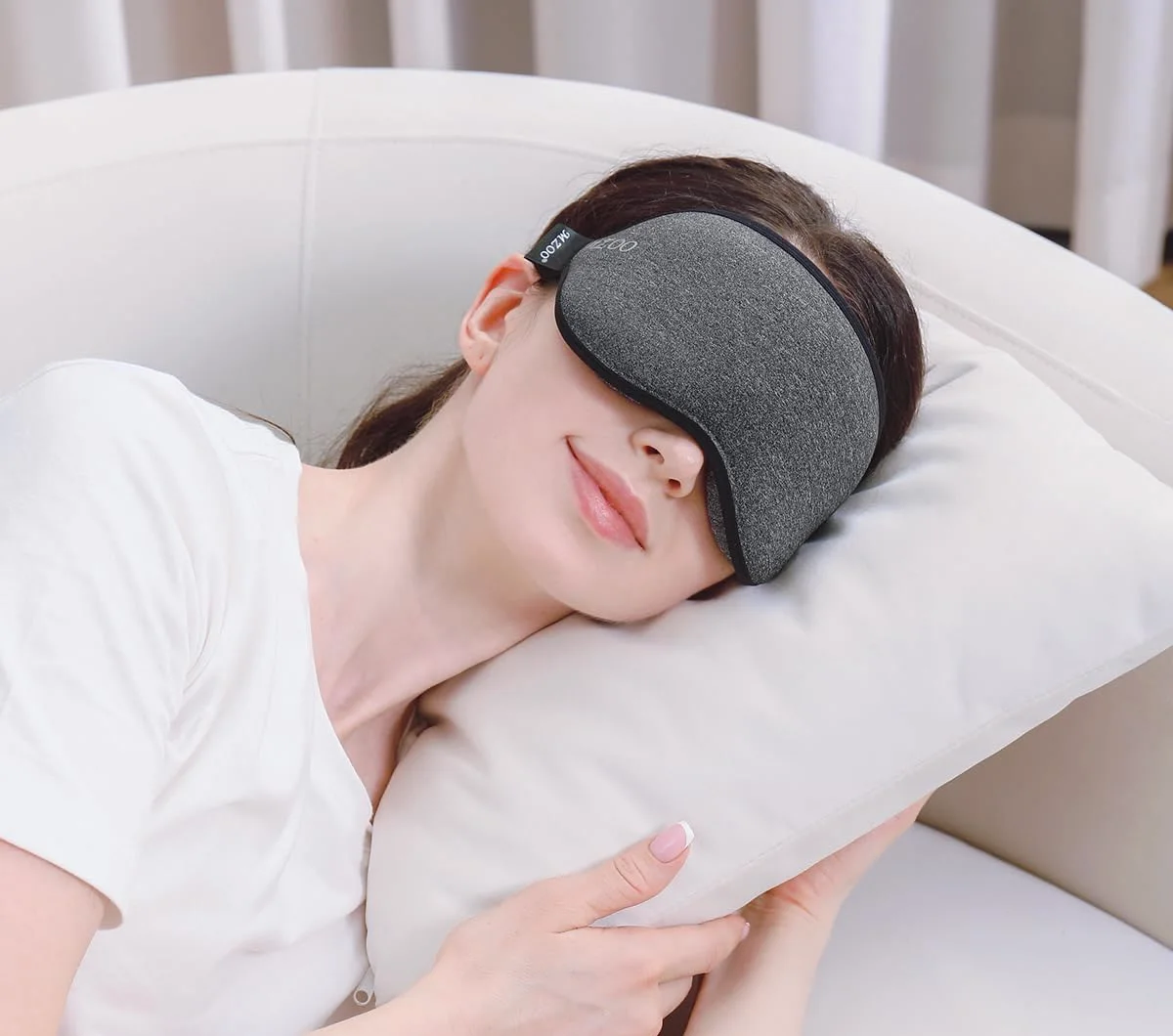
Our Contoured mask is the one we started with, in 2018. Its cups are 13 mm deep, and a 22 mm pad at the bridge of the nose closes the gap a flat mask leaves there. Once the strap is set, press that pad along the sides of your nose until it meets your cheeks. All three of our masks, in every color, are on our sleep mask shelf.
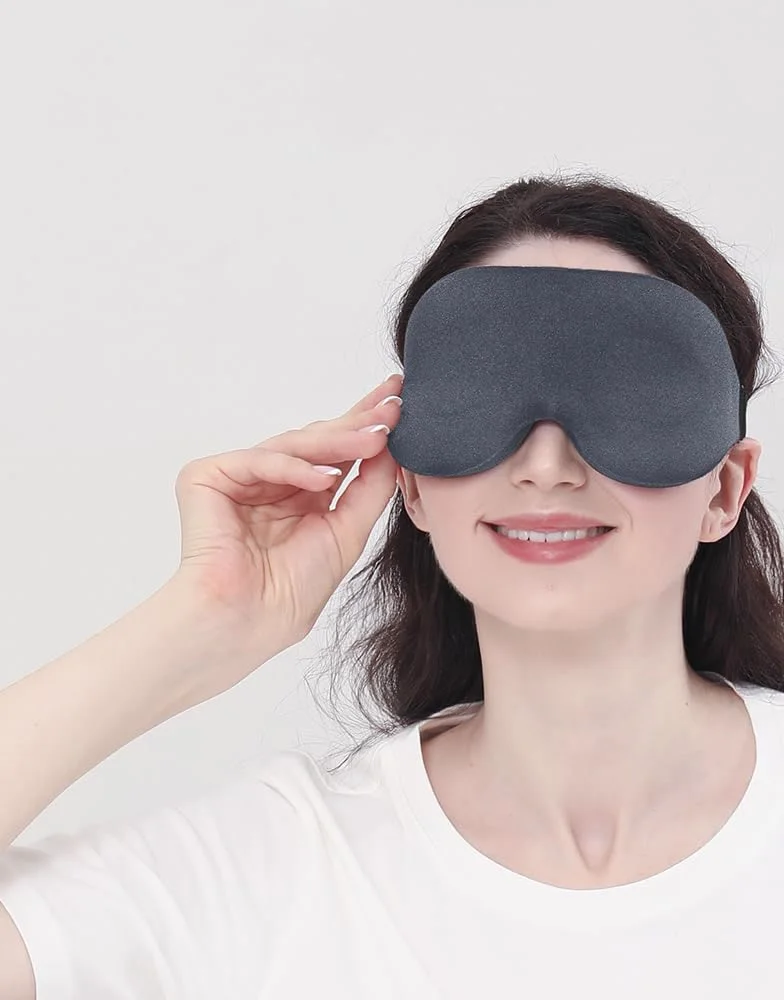
Bedroom light sources and what to do about each
Go down the first column before you reach for the last. A mask sits at the end of most rows because the room comes first.
| Light source | Try first | If light still gets through |
|---|---|---|
| Streetlight or a neighbor's porch light | Blackout curtains, blinds or a dark sheet over the window | Move the bed out of the beam, or wear a mask |
| Early sunrise in summer | Cover the window fully, edges included | A mask with padding at the nose |
| TV, laptop or phone | Switch off in the hour before bed | Phone face down, out of reach |
| Charger and standby lights | Unplug, or cover with tape | A mask |
| Hallway light under the door | Close the door, a rolled towel along the gap | A mask |
| A partner reading late | A small lamp aimed at the book, away from your side | A mask, as AASM Sleep Education suggests |
| Night light | Dim, and warm-colored for older people | Keep it on and wear a mask |
Every mask named here is part of the MZOO collection.