Key points
- Jet lag is the body clock out of step with local time, and light at the right hours can help it adjust, says the CDC.
- After a night shift, NIOSH asks for a room so dark you cannot see your hand, or an eye mask.
- Keep the mask on for the whole sleep, and add ear plugs for the noise.
- Pack the mask in its pouch so the cups keep their shape.
Jet lag starts with light
In the words of the CDC Yellow Book, jet lag is a temporary desynchronization between the internal biological clock and the local time after rapid travel across time zones. NIGMS, part of the National Institutes of Health, says light and dark have the biggest influence on circadian rhythms, the changes the body goes through over a 24-hour cycle. It names travel between time zones and shift work as two things that alter the normal sleep-wake cycle.
So the lever you hold is timing. The CDC says light exposure, or avoiding light, at the right times of day can help the body adapt to the destination. In practice that means seeking daylight at some hours and shutting it out at others, and in a lit cabin with the window shades half up, shutting it out takes a mask.
The Yellow Book also prints a set of jet lag tips adapted from the Walter Reed Army Institute of Research. For a westward morning flight it suggests a nap in the early morning, and adds that an eye mask and ear plugs may help during the flight. Note the word may. The timing comes first, and the mask is a tool for it.
Napping in a seat
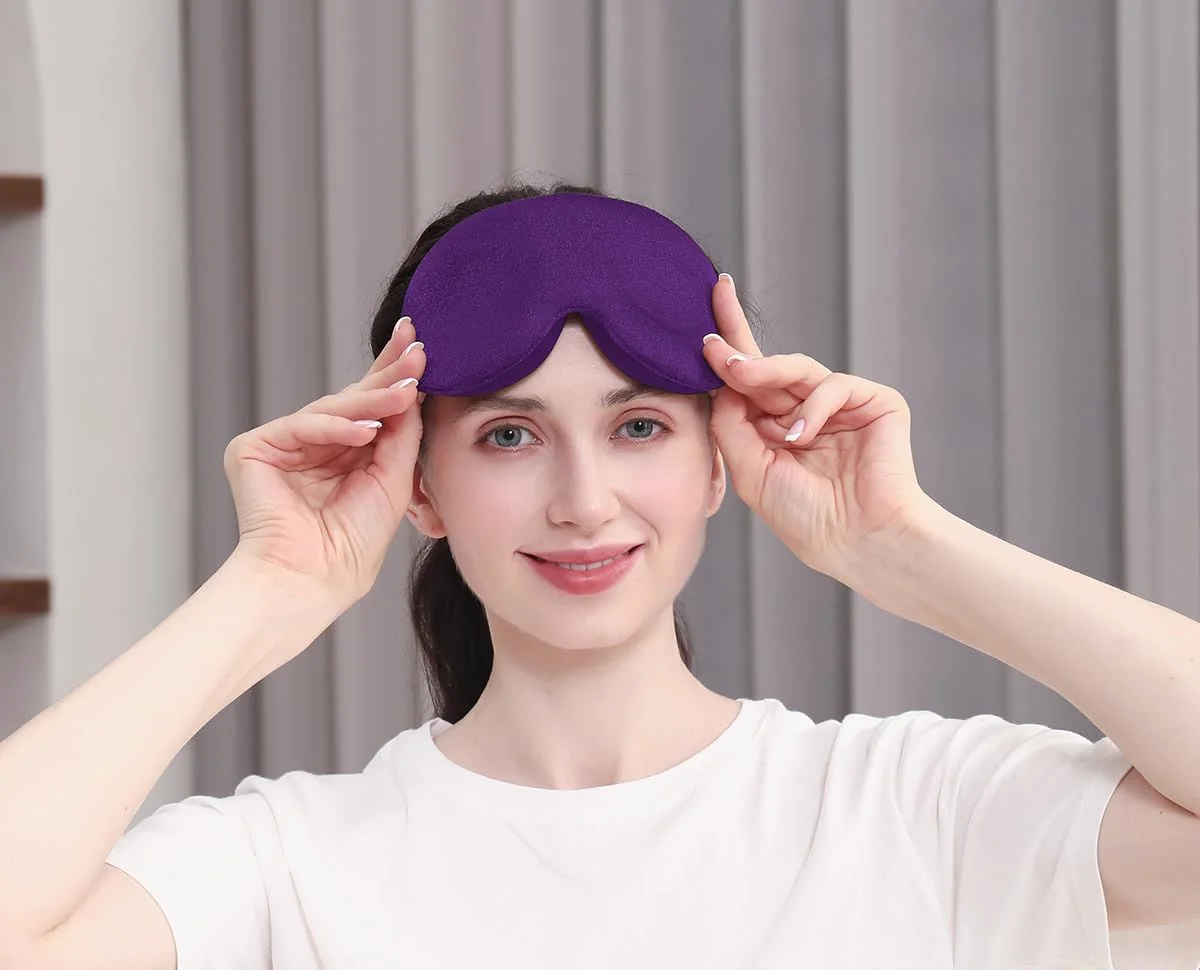
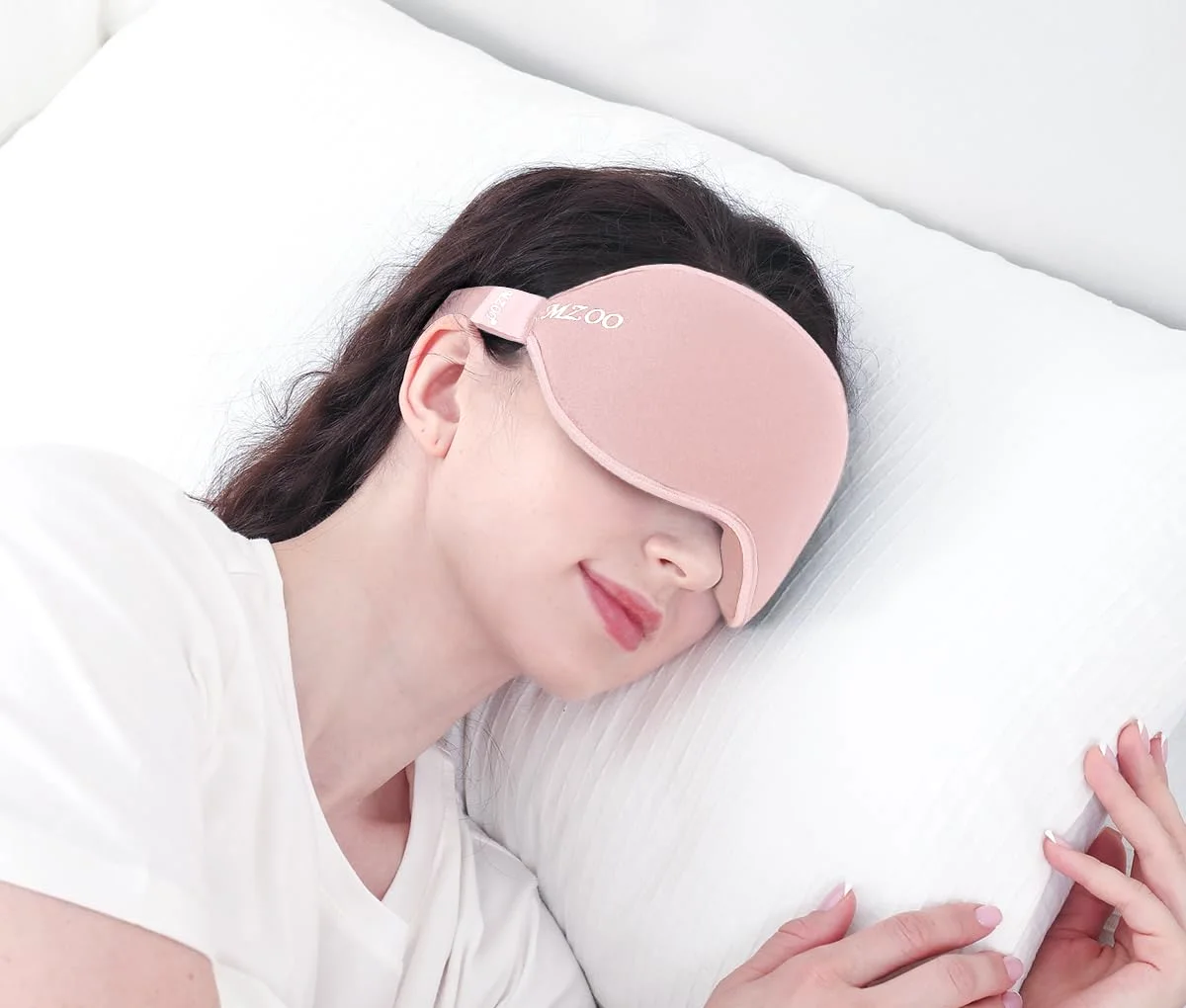
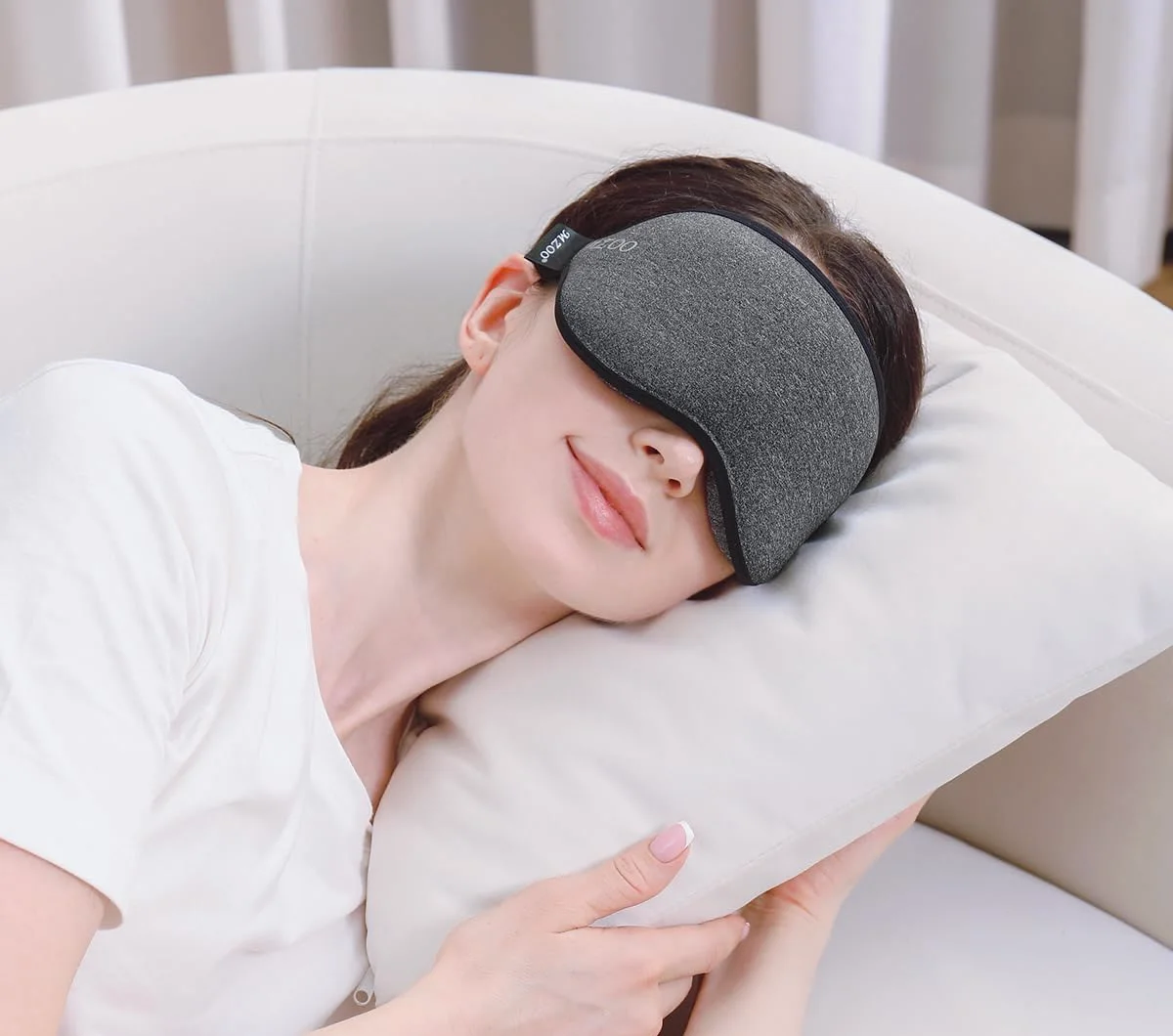
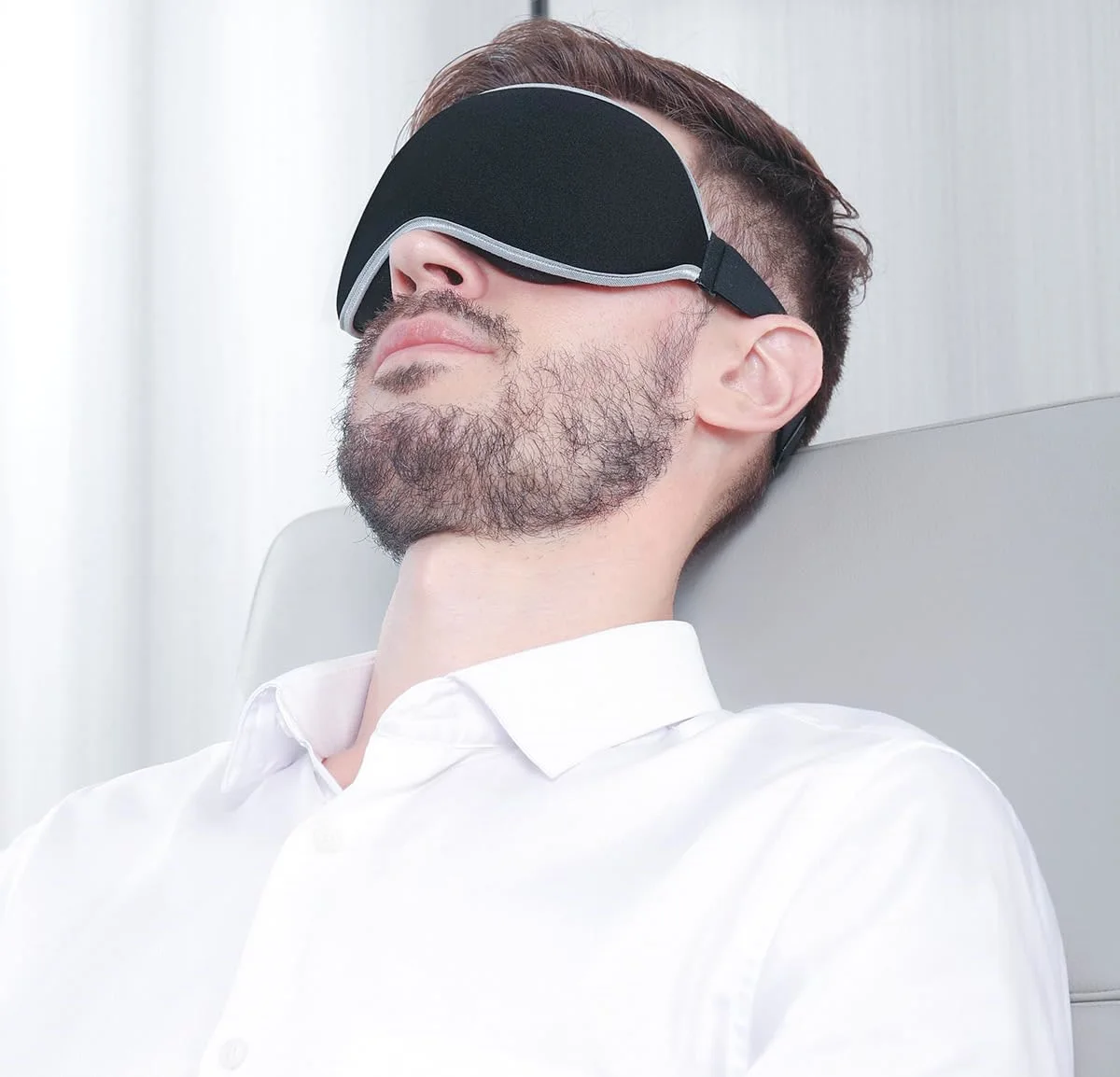
A plane seat is a hard place to keep a mask still. Your head tips back against the rest, then rolls toward the window, and a loose strap lets the mask ride up onto your forehead. Set the strap before you sit down. On our Contoured mask the slide buckle runs from 19 to 28 inches, and it should hold the mask in place when you turn your head, no tighter.
Light finds the gap at your nose first, because a reclined head tips the mask up off the cheeks. The Contoured mask has 22 mm of padding at the bridge of the nose to close that gap. Its cups are 13 mm deep, so your lids can move, and the sides are cut thin and bent at 15 degrees for leaning on the window.
Flying in makeup or lash extensions? Take the Spacious mask instead. Its 18 mm cups stand clear of the lashes, and the details are in our guide to lash extensions.
Daytime sleep after a night shift
Coming home from a night shift means going to bed as the street wakes up. NIOSH, the CDC institute for worker safety, runs a training course for nurses on shift work. Its advice is blunt: make the sleep environment very dark, so dark you cannot see your hand in front of your eyes, or wear an eye mask while sleeping. It gives the reason as well. Daylight will trigger waking.
The same course says a bedroom should be very dark whether you sleep at night or in the daytime, with room-darkening shades or heavy lined draperies at the windows. If light still gets in under the door, it says you can wear an eye mask, with one condition: for the mask to be effective, keep it on for the entire sleep. Push it up at the first noise and the daylight comes straight back.
Noise is the other half. NIOSH suggests ear plugs or a white noise machine, blackout shades or drapes, and a dim red nightlight for getting up briefly. Our Contoured and Pro masks both come with a pair of ear plugs in the box.
- 1
Close the blackout shades and switch off the hall light before you lie down.
- 2
Put the ear plugs in first, then the mask, so the strap is not in the way.
- 3
Set the strap above the ears and pull it until the mask stays put when you turn your head.
- 4
Leave the mask on until you mean to get up, as NIOSH advises, and use a dim red light for a trip down the hall.
Dorms, hostels and shared rooms
A shared room runs on everyone else's schedule. One roommate studies until two, a bunkmate scrolls a phone at dawn, and the hallway light slips under the door all night. Asking the whole room to go dark at your bedtime rarely works, so the dark has to come with you.
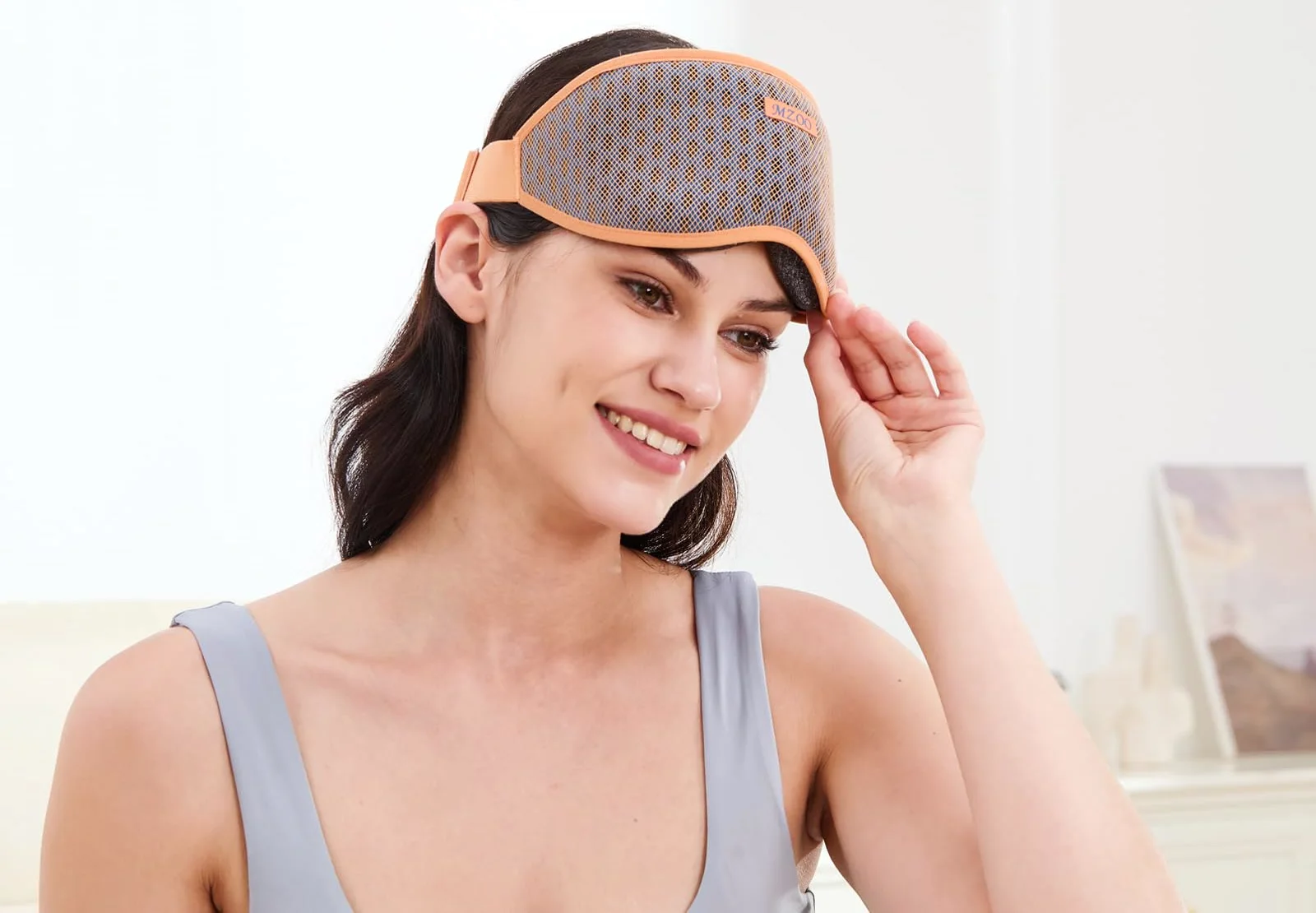
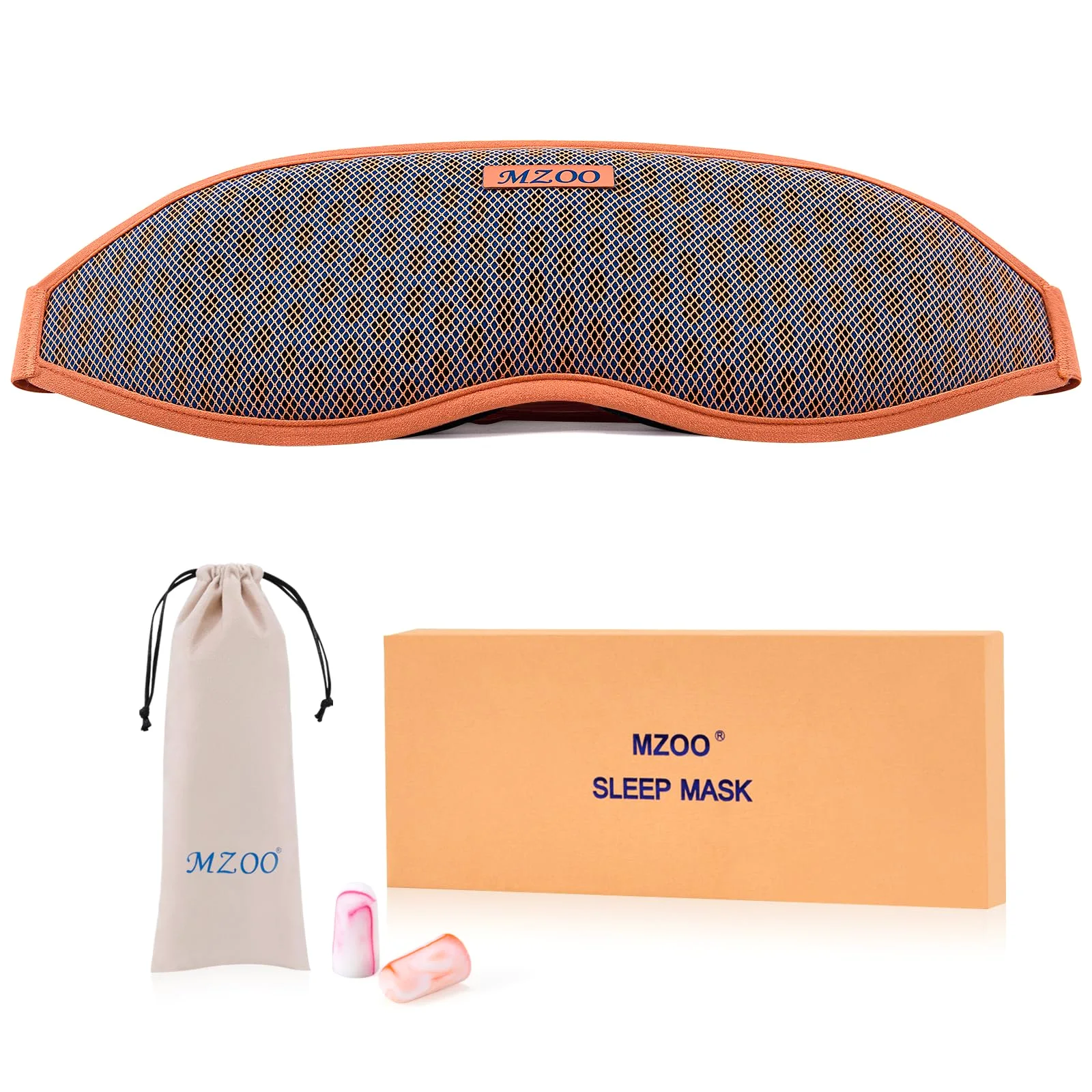
If your room runs warm, our Pro Breathable mask suits it: the face is a mesh over honeycomb-vented padding, so air moves through the mask instead of collecting under it. Its 18 mm cups leave the lids free, and the two-buckle strap, from 18.6 to 25.2 inches, keeps it level through a night of turning over.
Our masks that come with ear plugs are gathered on one page, MZOO travel sleep mask with ear plugs.
What to pack
A mask spends most of a trip in a bag, under shoes and chargers, and that is where molded cups get crushed. Give it a place of its own.
- The mask in its drawstring pouch, so the cups hold their shape.
- Ear plugs, which come in the box with our Contoured and Pro masks.
- Mild soap for a sink wash on a long trip. The Contoured mask is hand-wash, and the Pro mesh dries faster than solid fabric.
- For the bedroom at home, if you work nights: room-darkening shades or heavy lined drapes, as NIOSH suggests.
Where you sleep, and what helps
Light gets in by a different road in each place. Match the fix to the road, and keep the mask for the light you cannot switch off.
| Where you sleep | What gets in | What helps |
|---|---|---|
| Plane, westward morning flight | Cabin lights, window glare | A nap in the early morning, with an eye mask and ear plugs (CDC tips) |
| Bedroom after a night shift | Daylight around the shades | A very dark room, or an eye mask kept on for the whole sleep (NIOSH) |
| Bedroom by day on a busy street | Traffic and voices | Ear plugs or a white noise machine (NIOSH) |
| Dorm or shared room | Desk lamps, phones, the hall light | A mask with a strap that stays put, plus ear plugs |
| Warm room or summer trip | Heat under solid foam | A mesh mask such as the Pro Breathable |
| Getting up mid-sleep | A bright bathroom light | A dim red nightlight (NIOSH) |
Every mask named here is part of the MZOO lineup.